How to Choose Home Lighting: Lumens, Types & Decorative Tips
Choosing the right lighting for your home is one of the most impactful — and most overlooked — decisions in interior design. The right light can make a small room feel spacious, a cold kitchen feel welcoming, and a bedroom feel like a true retreat. This guide walks you through everything you need to know: how to calculate the right lumens for every room, the different types of lighting and when to use each, and how to choose decorative fixtures that elevate your space's personality.
Why Lumens Matter More Than Watts
For decades, homeowners chose bulbs by wattage — a 60-watt bulb for the bedside lamp, a 100-watt bulb for the kitchen. But watts measure energy consumption, not brightness. With modern LED lighting, a bulb can produce the same light as an old 60W incandescent while using just 8–10 watts.
The number you actually want to pay attention to is lumens. Lumens measure the total light output — the actual brightness you'll see in your room. The higher the lumens, the brighter the light. Understanding lumens is the single most useful skill for shopping for home lighting, because it tells you exactly what you're getting before you buy.
Quick rule: A traditional 60W incandescent bulb produces about 800 lumens. A 100W bulb produces about 1,600 lumens. Use these as a baseline when reading LED bulb specs.
How Many Lumens Do You Need Per Room?
The right number of lumens depends on two things: the size of the room (in square feet) and its purpose. A space used for precise tasks like cooking or grooming needs far more light than one designed for relaxation. The standard method is to multiply your room's square footage by the recommended lumens-per-square-foot for that room type.
Formula: Room sq ft × lumens per sq ft = total lumens needed
| Room | Lumens per sq ft | 100 sq ft example | Best color temp |
|---|---|---|---|
| Living Room | 10–20 | 1,000–2,000 lm | 2700K–3000K Warm |
| Bedroom | 10–20 | 1,000–2,000 lm | 2700K–3000K Warm |
| Kitchen (general) | 30–40 | 3,000–4,000 lm | 3000K–4000K Neutral |
| Kitchen countertop/sink | 70–80 | 7,000–8,000 lm | 3500K–4000K Neutral |
| Dining Room | 30–40 | 3,000–4,000 lm | 2700K–3000K Warm |
| Bathroom | 70–80 | 7,000–8,000 lm | 3000K–4000K Neutral |
| Home Office | 50–75 | 5,000–7,500 lm | 4000K–5000K Cool |
| Hallway | 5–10 | 500–1,000 lm | 3000K Neutral |
These numbers are starting points, not strict rules. Rooms with dark walls, very high ceilings, or minimal natural light will need additional lumens to feel properly illuminated. A dimmer switch is the most practical solution — it lets you tune any room's brightness to fit the moment, from bright and energetic during the day to warm and relaxed in the evening.
Pro tip: Instead of one powerful overhead fixture, distribute lumens across multiple light sources — a ceiling fixture, a floor lamp, and a table lamp. This "layered" approach feels natural and avoids harsh shadows.
The Four Types of Lighting for Your Home
Professional designers rarely rely on a single light source. Instead, they layer four distinct types of lighting to create rooms that feel both functional and atmospheric. Understanding the role of each type will help you plan any room from scratch — or fix one that just doesn't feel right.
☀️
1. Ambient (General) Lighting
The base layer of light that illuminates the whole room evenly. Usually comes from ceiling fixtures, recessed lights, or flush mounts. Every room needs this as its foundation.
💡
2. Task Lighting
Focused, bright light for specific activities — cooking, reading, grooming. Under-cabinet LEDs in the kitchen, desk lamps in a home office, and vanity lights in a bathroom are all task lighting.
🎯
3. Accent Lighting
Used to highlight specific features — artwork, architectural details, bookshelves, or plants. Typically three times brighter than ambient lighting in its focused area. Track lights and wall sconces do this well.
✨
4. Decorative Lighting
Fixtures that are visual statements in themselves — chandeliers, statement pendants, sculptural lamps. They contribute some light but their primary job is to express style and personality.
The most effective lighting plans layer all four types. A kitchen, for example, might have recessed ceiling lights for ambient coverage, under-cabinet LEDs for task lighting over the countertop, a pendant above the island for both task and decorative effect, and a dimmer on everything so the mood can shift from meal-prep mode to dinner-party mode effortlessly.
Room-by-Room Lighting Guide
Let's put it all together with practical recommendations for the rooms people ask about most.
🍳 Kitchen
30–80 lumens/sq ft depending on zone
- Ambient: Recessed LED downlights across the ceiling
- Task: Under-cabinet LEDs over countertops and sink
- Decorative: Pendant lights over kitchen island
- Color temp: 3000K–4000K neutral white
- Tip: Use dimmers on all circuits for flexibility
🛋️ Living Room
10–20 lumens/sq ft for ambient
- Ambient: Ceiling fixture or recessed lights
- Task: Floor lamp or table lamp for reading
- Accent: Wall sconces or track lights for artwork
- Color temp: 2700K–3000K warm white
- Tip: Layer 3+ light sources to avoid flat lighting
🛏️ Bedroom
10–20 lumens/sq ft ambient
- Ambient: Soft ceiling light or pendant
- Task: Bedside lamps — around 400 lumens each
- Accent: LED strips behind headboard for atmosphere
- Color temp: 2700K warm white for relaxation
- Tip: Dimmable bulbs are essential for a bedroom
🪥 Bathroom
70–80 lumens/sq ft
- Ambient: Flush mount or recessed ceiling lights
- Task: Vanity lights beside (not above) the mirror
- Color temp: 3000K–4000K for accurate color rendering
- CRI: Choose CRI 90+ for grooming accuracy
- Tip: Side-mounted vanity lights eliminate face shadows
🖥️ Home Office
50–75 lumens/sq ft
- Ambient: Bright overhead or recessed lights
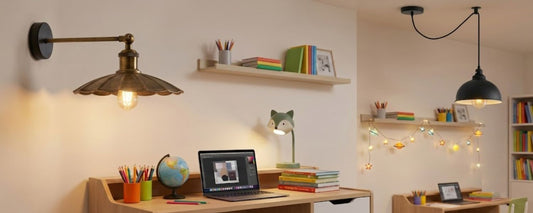
- Task: Dedicated desk lamp, minimum 400–800 lumens
- Color temp: 4000K–5000K cool white for focus
- Tip: Position desk lamp to avoid screen glare
- Tip: Add bias lighting behind monitor to reduce eye strain
🍽️ Dining Room
30–40 lumens/sq ft
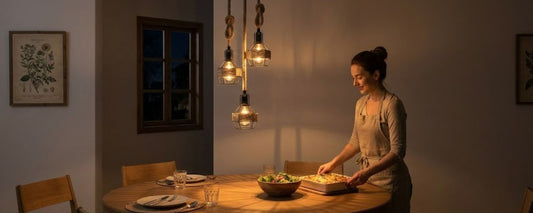
- Feature: Chandelier or pendant above the table
- Height: Hang pendant 30–36 inches above table surface
- Color temp: 2700K–3000K warm for flattering ambiance
- Tip: Always put dining room lighting on a dimmer
- Tip: Width of fixture should be ½ of the table width
How to Choose Decorative Lighting That Works
Decorative lighting is where function meets personality. A chandelier in the dining room, a sculptural floor lamp in the corner, a row of pendants over a kitchen island — these are the pieces that define a room's character. But beyond aesthetics, they need to be chosen thoughtfully to avoid common mistakes.
-
1
Scale your fixture to the room
A common mistake is choosing a chandelier that's too small for the space. A good rule of thumb: add the room's length and width in feet, and that number in inches is an ideal chandelier diameter. A 12 × 14 ft dining room suits a 26-inch fixture.
-
2
Match the finish to your existing hardware
Brushed nickel, matte black, brass, and chrome are the four most common metal finishes in American homes. Your light fixtures don't need to perfectly match every piece of hardware, but they should be in the same family. Mixing too many finishes creates visual clutter.
-
3
Choose the right color temperature for the mood
Warm white (2700K–3000K) creates a cozy, golden glow ideal for living rooms, bedrooms, and dining rooms. Neutral white (3000K–4000K) is bright and clean — great for kitchens and bathrooms. Cool white (4000K–5000K) energizes — best for offices and garages.
-
4
Use pendants over functional surfaces
Pendant lights over kitchen islands, dining tables, and bathroom vanities are both decorative and purposeful. They focus light exactly where you need it while becoming visual anchors in the room. For kitchen islands, use one pendant per 2 feet of island length.
-
5
Install dimmers everywhere you can
Dimmers are the single most cost-effective upgrade in home lighting. They let a single fixture serve multiple moods — bright for cleaning and cooking, soft for entertaining and winding down. Most modern LED bulbs are compatible with LED-specific dimmers.
-
6
Don't ignore ceiling height
Standard 8-foot ceilings work well with flush mounts and low-profile semi-flush fixtures. Rooms with 9- to 10-foot ceilings can accommodate mini pendants. Grand chandeliers and long pendants are reserved for spaces with 12-foot ceilings or vaulted heights.
-
7
Think about CRI, not just lumens
The Color Rendering Index (CRI) measures how accurately a light source renders colors compared to natural sunlight. A CRI of 80 is adequate for most rooms; for bathrooms, art studios, and anywhere you need to see colors accurately, choose fixtures with a CRI of 90 or above.
"Good lighting is invisible. You don't notice it — you simply feel comfortable, focused, or at ease in a space. The moment lighting becomes noticeable is usually the moment something has gone wrong."
A Quick Note on LED vs. Other Bulb Types
If you're choosing home lighting in 2026, LEDs should be your default choice for almost every application. They use up to 80% less energy than traditional incandescent bulbs, last 15,000 to 50,000 hours (compared to 1,000 hours for incandescent), and are available in virtually every color temperature, fixture type, and lumen output you'll need. The upfront cost is slightly higher, but the long-term savings in energy and replacement costs make them the clear winner for any home.
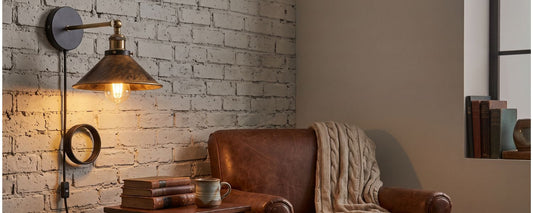
For specialty decorative fixtures where the look of the bulb itself matters — Edison-style pendants, vintage sconces — LED filament bulbs offer the warm, nostalgic glow of traditional incandescents with all the efficiency of modern technology. They've become enormously popular in American homes and come in a wide range of shapes and styles to suit any aesthetic.
Final Thoughts
Choosing the right home lighting doesn't have to be overwhelming. Start with lumens — use the room-by-room guide above to calculate how much brightness you actually need. Layer your light sources so no single fixture is doing all the work. And when it comes to decorative fixtures, choose pieces that are proportional to your room, consistent in finish, and aligned with the color temperature that serves the mood you want to create.
At LEDsone USA, we carry a curated range of LED fixtures — from recessed downlights and under-cabinet strips to statement pendants and chandeliers — designed to help you build a complete, layered lighting plan for every room in your home.
Ready to light your home the right way?
Browse LEDsone's full range of indoor LED lighting — kitchen, bedroom, living room, and more.
Shop LEDsone USA →
Etiquetas:
Anterior
Best Hanging Lights for Every Room — Buyer's Guide 2026
Próximo
How to Switch to Energy-Efficient LED Lighting and Save $225+ a Year (2026 Guide)
Artículos relacionados
How to Match a Lamp Shade to Your Lamp Base
Aug 27 2026
DIY Guide: Wiring a New Light Fixture Safely
Aug 19 2026