Kids Study Room Lighting Ideas: A Parent's Guide to Better Focus
Struggling with a dim or harsh homework corner? Here's how to layer ambient, task, and accent lighting so your child can actually focus — without a full room renovation.
The right lighting won't make a child want to do homework, but the wrong lighting will absolutely make it harder for them to concentrate. A study area that's too dim causes squinting and fatigue within twenty minutes. One that's too harsh — a single bright overhead bulb, for example — creates glare on paper and screens and makes a room feel more like an office than a place a kid wants to sit down in.
The good news: you don't need a dramatic renovation to fix this. Most study lighting problems come down to using one light source to do a job that really needs three. Below is how to layer lighting properly, what light color actually helps with focus, and specific product picks for each layer.
Why Study Room Lighting Affects Focus
When a child reads or writes under light that's too dim, their eyes work harder to resolve contrast, which leads to fatigue, headaches, and a shorter attention span before they start fidgeting. When light is too harsh or comes from a single overhead source, it creates shadows across the page — usually from their own hand or head — and glare on glossy paper or tablet screens.
The fix isn't "brighter" or "dimmer." It's layered and directional: a soft general light for the room, plus a focused, adjustable light aimed at the actual work surface.
The 3 Layers of Study Room Lighting
Ambient
Fills the room so it doesn't feel like a spotlighted stage with dark corners.
Task
Focused, adjustable light aimed directly at the desk and work surface.
Accent
Optional soft light for evening wind-down, once homework is done.
Ambient Lighting: the room's base light
This is the light that fills the room so it doesn't feel like a spotlighted stage with dark corners. A semi-flush mount ceiling light works well here because it spreads light more evenly than a single bare bulb, without the drop height of a pendant — useful in bedrooms with lower ceilings or bunk beds.

Ambient Layer
Shop This Light →
Caged Flush Mount Ceiling Light
Low-profile ceiling fixture that spreads soft, even light across the whole room — ideal as the base layer behind a desk task light.
$39.99Shop This Light →
Task Lighting: light on the desk itself
This is the layer that matters most for actual homework and reading. Task light should be positioned so it doesn't cast a hand-shadow across the page (for right-handed kids, light from the upper left works best, and vice versa for lefties), and it should be adjustable, since desk setups change as kids grow.
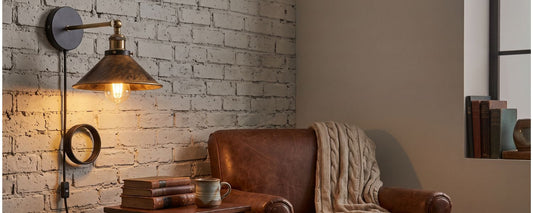
If a freestanding desk lamp isn't part of the room's plan, an adjustable wall-mounted reading light positioned beside or slightly above the desk does the same job — especially in smaller rooms where desk space is tight.

Task Layer
Shop This Light →
Plug-In Bedside Wall Light — Adjustable Reading Lamp
Articulating arm and pivoting head let you aim light exactly at the desk. Simple plug-in install with a 4m cord and in-line switch — no electrician needed.
$79.99Shop This Light →
Accent Lighting: mood and wind-down
Not essential for studying, but useful for the hour before bed when you want the room to shift out of "work mode." A warm-toned bulb on a separate switch — kept off during homework time and on afterward — helps signal that transition.

Accent Layer
Shop This Bulb →
G80 Dimmable LED Edison Bulb, 2700K Warm White
A cozy, dimmable amber glow — not intended for the task light, but perfect for a bedside lamp or sconce once homework wraps up for the night.
$17.99Shop This Bulb →
What Light Color Is Best for Studying?
Light color is measured in Kelvin (K), and it's one of the most overlooked parts of a study setup:
- 2700K–3000K (warm white) — cozy, similar to a traditional incandescent bulb. Good for accent lighting or evening wind-down, but too dim and yellow-toned for sustained reading.
- 4000K–4500K (cool/neutral white) — closer to daylight, with better contrast for reading text over long focus sessions. Generally the better choice for a desk task light.
- 5000K+ (daylight) — very bright and blue-toned. Can feel clinical in a bedroom and isn't necessary for a home study space.
Practical takeaway: if you can only get one bulb color right, aim for a neutral-to-cool white in the task light, and keep the ambient ceiling light warmer so the room doesn't feel like a laboratory. Check the Kelvin rating on the specific bulb listing before buying, since it varies by product.
Study Room Lighting Ideas by Space Type
Dedicated Study Room
If a child has a full room or converted space just for study, this is the easiest setup to layer properly: a semi-flush ceiling light for ambient base light, an adjustable wall-mounted reading light above and to the side of the desk, and — if there's a reading chair or bed — a wall sconce on a separate switch for evening use.
Desk in a Shared Bedroom
The challenge here is not disturbing a sibling once the room switches from "study mode" to "sleep mode." A wall-mounted task light near the desk that can be switched independently from the room's main ceiling light lets one child keep working while the other's side of the room stays dark.
Study Nook or Corner (Hallway, Under Stairs, Landing)
Nooks often don't have a ceiling fixture directly overhead, so the task light effectively has to do double duty as the main light source. Prioritize an adjustable wall light mounted close to the desk over a plug-in table lamp — it frees up limited desk surface and keeps the cord out of a high-traffic walkway.
Common Study Lighting Mistakes to Avoid
- Relying on one ceiling light for everything. It creates shadows on the page and isn't adjustable to the child's actual seating position.
- Positioning the light source in front of the child rather than beside/above. This causes glare on the page or screen instead of illuminating it.
- Using warm (2700K) bulbs for the task light. Cozy, but not ideal for sustained reading contrast.
- Forgetting handedness. A right-handed child needs light from the upper left, and a left-handed child needs it from the upper right, to avoid shadowing their own writing.
- No separate switch for ambient vs. task light. Makes it harder to shift the room from "homework" to "wind-down" without turning everything off at once.
FAQs
What is the best light color for a kids' study area?
A neutral-to-cool white in the 4000K–4500K range for the task light over the desk generally supports better reading contrast than warm white. Keep the room's ambient light warmer and softer so the space still feels comfortable, not clinical.
Do I need a desk lamp, or can a wall light work instead?
A wall-mounted, adjustable reading light can do the same job as a desk lamp — sometimes better in small rooms, since it doesn't take up desk surface. What matters is that it's positioned above and to the side of the work surface and can be switched independently of the room's main light.
How many light sources does a study area actually need?
Two is usually the practical minimum: one ambient source for the room (ceiling light) and one task source aimed at the desk. A third, optional accent light helps for evening wind-down but isn't required for studying itself.
Should the study light be on the same switch as the bedroom light?
Ideally not. A separate switch for the task light lets a child keep working — or a sibling keep sleeping — independent of the room's main light, which is especially useful in shared bedrooms.
Is a brighter bulb always better for homework?
No. A dim room does need more light, but simply increasing overhead brightness often adds glare rather than fixing contrast on the page. A properly positioned, moderately bright task light solves the problem more effectively than a very bright ceiling fixture.
Related Reading
Tags:
Previous
Modern vs. Vintage vs. Industrial Pendant Lights: How to Pick the Right Style
Next
Fabric Electrical Cable Guide: Colors, Lengths & How to Choose the Right One
Related articles
How to Match a Lamp Shade to Your Lamp Base
Aug 27 2026
DIY Guide: Wiring a New Light Fixture Safely
Aug 19 2026