Wall Sconce Placement Guide: Height, Spacing & Room-by-Room Rules
Key Takeaways
Good sconce placement comes from balancing eye level, the fixture’s proportions, and the room’s purpose. Use these principles as a starting point, then test the arrangement before making permanent holes.
- Begin with a general eye-level range, then adjust for the fixture and ceiling height.
- Measure spacing from walls, doors, furniture, mirrors, and other architectural lines.
- Choose placement according to the room and the lighting task.
- Consider glare, bulb direction, fixture scale, and the surrounding light sources.
- Confirm wiring, clearances, ratings, and the final position before drilling.
Start with the right wall sconce height
The right wall sconce height makes a room feel considered rather than accidental. For many general-purpose installations, the centre of the fixture sits around standing eye level, though the light source itself may sit slightly higher or lower within the fitting. A useful wall sconce placement guide can help establish a starting range, but the room always has the final say. Ledsone offers vintage and LED lighting solutions, so fixture shape and lamp position may vary considerably from one style to another.
The standard eye-level placement rule
For hallways, living rooms, and entryways, place the centre of the sconce roughly 60 to 66 inches from the finished floor as an initial reference. This is a practical answer to how high to hang wall sconces when the fitting is used for general illumination: the light is visible without sitting directly in the eye line. Measure to the centre of the backplate or fitting, not automatically to its top edge. Then check where the bulb, shade, or diffuser will actually sit.
How ceiling height changes the measurement
A standard measurement can look too low in a room with a very high ceiling, or too high in a compact room with a low ceiling. Rather than pushing the fixture upward simply to fill empty wall space, relate it to doors, artwork, furniture, and the people using the room. In a tall room, a modest upward adjustment may work, while a low ceiling usually benefits from keeping the light closer to human scale. The goal of wall light mounting height is proportion, not a rigid number.
When to place sconces above or below eye level
Place a sconce slightly above eye level when you want soft ambient light and less direct glare as people walk past. Lower placement can make sense beside a bed, near a seated reading position, or where the fixture must relate to a console or low artwork. The bulb’s position matters more than the backplate alone. If the fitting has a low-set lamp, mounting the backplate a little lower can still leave the light source in a comfortable position.


How furniture and architectural features affect height
Furniture gives the eye a useful horizontal reference. Beside a bed, sofa, or console, centre the sconce in relation to that item rather than treating the bare wall as the only guide. Keep shades clear of headboards, shelves, trim, and cabinet doors, and check that switches remain reachable. The visual centre matters as much as the measured centre, especially when a tall fitting has a small shade or a long arm.
Measure spacing and alignment before installation
Sconce spacing should be planned as a composition, not guessed one fixture at a time. Mark the wall, the furniture below it, and nearby openings before deciding where the electrical points belong. This is particularly helpful when a pair must align with a mirror or when a wall is interrupted by a door. A few minutes with masking tape can reveal an awkward arrangement before it becomes a wiring problem.
How far apart to space multiple sconces
For repeated fixtures, begin with even spacing and then adjust for the wall’s usable width. Long hallways often look calmer when sconces are separated by generous intervals rather than clustered near each other. As a broad design reference, some guidance recommends around 8 to 10 feet between hallway fixtures, but the fitting’s beam, brightness, and the hallway’s length also matter. Consistent centre-to-centre measurements usually look more intentional than equal distances measured from unrelated corners.
Centering sconces on walls and furniture
A single sconce generally works best when its centre aligns with the centre of the wall section, console, bed, or chair grouping it serves. Measure the usable section between trim, corners, and openings rather than the full architectural wall. For a pair, divide the visual area evenly around the central feature. Before marking, step back and view the wall from the main entrance to the room; perspective often exposes an alignment that a close-up measurement misses.
Aligning sconces with mirrors, artwork, and windows
Use the edges and centre lines of nearby features as a quiet grid. Beside a mirror, keep both fixtures at the same height and leave enough side clearance for the shades or arms. Above artwork, consider the frame width and the direction of the beam rather than placing the fitting at an arbitrary eye-level point. Windows and door casings may create stronger vertical lines, so a slight shift can produce better balance without making the sconces appear misplaced.
Creating balanced placement in asymmetrical rooms
An asymmetrical room does not require perfectly mirrored walls. It needs a visual counterweight: a sconce can balance a tall plant, shelving, a doorway, or a large piece of furniture on the opposite side. First identify the room’s strongest vertical and horizontal lines, then place the light where it supports them. If the arrangement still feels uncertain, use temporary paper templates at the proposed size and live with them through different lighting conditions.
Choose the right placement for each room
The best placement changes with how a room is used. A bedroom asks for reach and comfort, while a hallway needs an even rhythm and a bathroom needs useful, flattering illumination. Start by identifying the activity, the usual eye level, and the surfaces that must remain clear. These room-by-room decisions matter more than applying one wall sconce height everywhere.
Bedroom sconces beside the bed
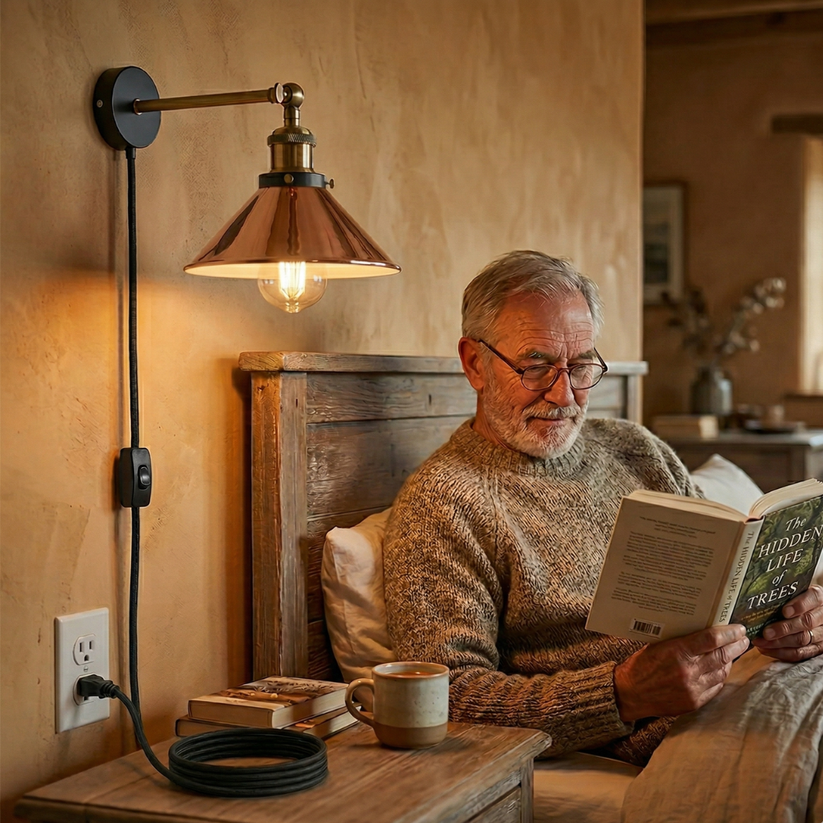
Bedside sconces should be easy to operate from a sitting or lying position and should not shine into the eyes of someone reading. Mount them in relation to the mattress, headboard, and bedside table, leaving room for pillows and movement. Plug-in fixtures may need cord planning, while hardwired fittings require the box position to be decided early. A practical bedside sconce placement reference can help compare options, but test the light from the actual bed before fixing the height.
Bathroom sconces beside or above the vanity mirror
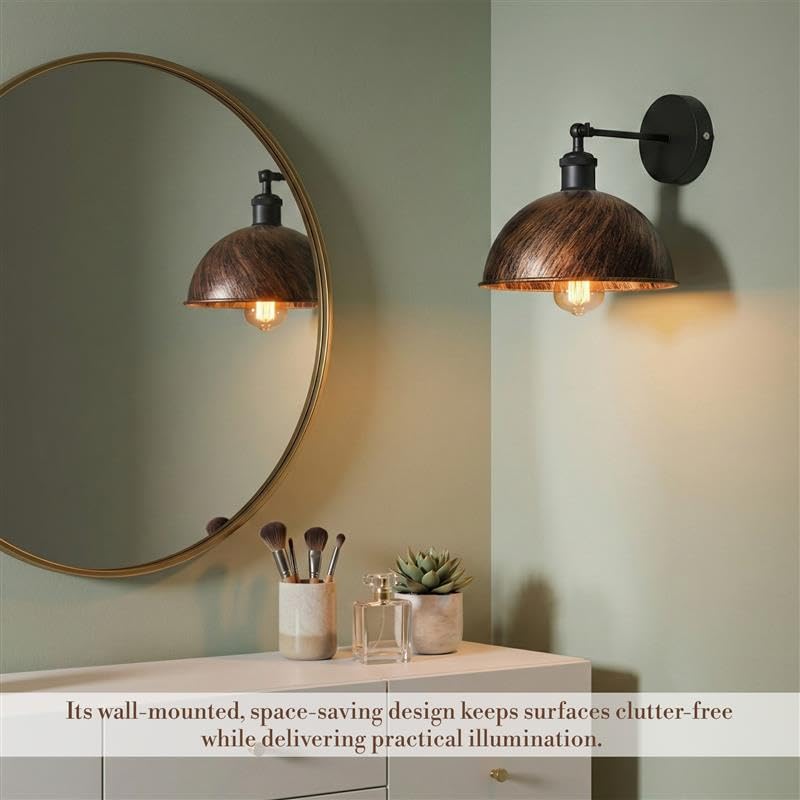
For sconces beside a vanity mirror, place the light source around eye level and keep both sides even. This reduces strong shadows across the face more effectively than relying on a single light from above. If a fitting sits above the mirror, check the available wall height and the mirror’s proportions; the sconce height above mirror should leave enough clearance without making the arrangement look top-heavy. Use fittings suitable for the bathroom’s moisture conditions.
Living room sconces around seating areas
In a living room, sconces can provide gentle background light around a sofa, fireplace, or reading chair. Keep them high enough to avoid glare for seated people, but low enough that the beam contributes to the room rather than disappearing into the ceiling. Relate pairs to the seating group or mantel, not merely to the room’s outer corners. Dimmers are useful where the same fixture must shift from relaxed ambient light to brighter evening use.
Hallway and staircase sconces
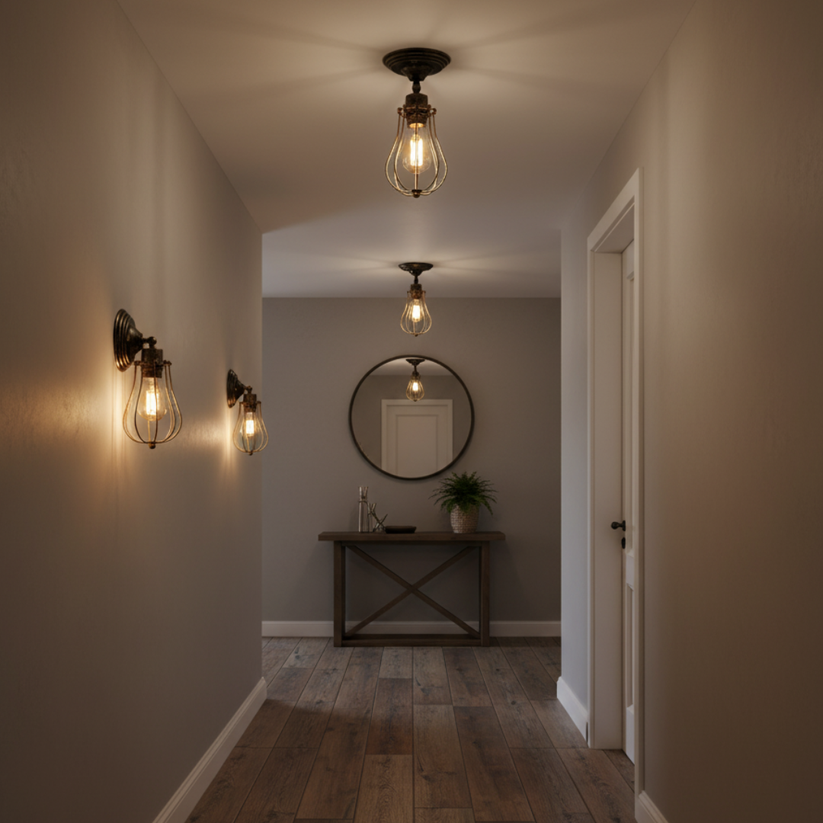
Hallway fixtures should create a comfortable path without narrowing the passage or catching on coats and bags. Keep them clear of door swings, handrails, and corners, and repeat the same centre height along a run whenever possible. For a staircase, follow the slope and landings while keeping the fittings accessible for maintenance. Hallway sconce spacing depends on beam spread and corridor length, so leave enough distance to avoid bright pools that alternate with dark gaps.
Entryway, dining room, and home office placement
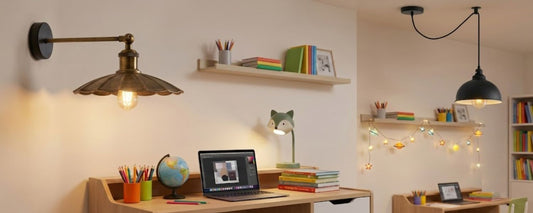
An entryway sconce should relate to the door, coat storage, and any console without obstructing circulation. In a dining room, place wall lights high enough to complement the table and low enough to add warmth to the walls; avoid competing with a pendant. A home office needs controlled light near the desk, preferably positioned to reduce reflections on screens. In each case, mark the seated and standing sightlines before choosing the final point.
Set wall sconce height for different lighting tasks
A fixture’s job determines its ideal position. Reading light needs reach and control, ambient light needs a broad and comfortable spread, and accent light needs accurate direction. The same fitting may work in more than one room, but its height should change with the task. Think about where the light lands, not only how the fitting looks when switched off.
Reading and bedside lighting
For reading, position the light so the page is illuminated without placing the bulb in the reader’s direct view. Beside a bed, the switch should be reachable while sitting, and an adjustable arm can be more useful than a fixed decorative shade. Check the position with a book in hand and the bed made up, since pillows and headboards alter the effective reach. A slightly lower fitting may be comfortable beside a low bed, while a tall headboard calls for a more careful adjustment.
Ambient lighting for living spaces
Ambient sconces should spread light broadly enough to soften the room without creating a harsh bright spot. Upward or shaded fixtures can wash a wall, while diffused downward light can add useful illumination near seating. Mount the fitting just above the most common standing eye line when glare is a concern. Layer sconces with ceiling fixtures and lamps so no single source has to provide all the room’s brightness.
Accent lighting for artwork and architectural details
Accent sconces work best when their beam is aimed deliberately at artwork, textured plaster, shelving, or a fireplace surround. Place the fitting according to the feature’s centre and the beam’s reach rather than using a general floor measurement. A picture light or directional sconce may need to sit closer to the artwork than a room-lighting fixture would. Avoid placing the light so low that its hardware becomes the main focus
Task lighting around mirrors and work areas
Task lighting should illuminate the face, hands, or work surface evenly. Around a mirror, pairs at either side usually reduce shadows better than one overhead fitting, provided they are aligned and spaced clear of the mirror edges. At a desk, place the light opposite the writing hand where possible and check for reflections on the screen. The ideal height is the one that serves the movement and sightline of the task.


Follow room-by-room spacing and placement rules
There is no universal number of sconces for every room. Quantity depends on the wall length, the fixture’s output, the desired mood, and whether other lights already cover the space. Start with the room’s circulation and focal points, then add fixtures where they improve comfort or balance. This prevents decorative repetition from becoming visual clutter.
How many sconces each room needs
A single fixture may be enough for a small entry, a compact reading corner, or a narrow section of wall. Pairs are natural beside beds, mirrors, fireplaces, and centred artwork. Longer halls and larger living rooms may need several fixtures, but they should be spaced as a connected rhythm. Count the useful lighting zones first, then decide whether each zone needs one fitting or a balanced pair.
Recommended clearance from doors, corners, and cabinetry
Leave enough space for doors to open fully and for people to pass without brushing the fitting. Corners can make a shade feel cramped, while cabinetry may block the beam or prevent access to the switch. Check the fixture’s projection, not just its backplate width. Mark the door swing and cabinet doors on the wall before finalising the electrical position.
Placement rules for narrow hallways
In a narrow hall, shallow fixtures with contained projections are usually easier to live with. Keep the centre height consistent and avoid placing a fitting where it competes with a door casing or a coat hook. If the corridor is long, alternate placement only when the architecture demands it; an even line on one wall can look cleaner than forced symmetry. The phrase wall sconce height bedroom / hallway / living room covers different needs, so do not transfer bedroom measurements directly to a passage.
Using pairs, clusters, and single sconces
Pairs bring order to symmetrical features, while a cluster can suit a stairwell or tall blank wall. A single sconce is often strongest when it has a clear relationship with a mirror, artwork, console, or doorway. Use this short check before committing to a group:
- Identify the feature or activity each fixture serves.
- Measure centre-to-centre spacing rather than judging by eye alone.
- Check the combined width and projection against the wall.
- View the arrangement from the room’s main approach.
Account for sconce size, light direction, and room scale
Height and spacing cannot be separated from the fixture itself. A broad fabric shade reads differently from a slim metal arm, even when both backplates sit at the same measurement. Ledsone carries over 2,000 vintage and modern LED lighting styles, making proportions, lamp types, and finishes worth comparing before the wiring is final. Choose the fitting and its position together rather than selecting a height in isolation.
Matching fixture proportions to the wall
A large wall needs enough visual weight to keep a substantial sconce from looking lost, while a small pier or narrow section may need a compact fitting. Compare the fixture’s height and projection with nearby doors, trim, and furniture. Leave breathing room around the shade and arm so the light does not look squeezed into a corner. A simple paper silhouette at full size is often more revealing than a product photograph.
Choosing upward, downward, or adjustable light
Upward light can create a soft wash and make a ceiling feel brighter, while downward light is useful near a console, stair, or reading chair. Adjustable fittings allow more precise control but may expose the bulb from certain angles. Match the direction to the task and to the wall surface; textured finishes can produce attractive shadows, while glossy surfaces may reflect too sharply. Always check the beam from the viewer’s normal position.


Managing glare and exposed bulbs
Glare often comes from seeing the lamp directly while walking, sitting, or looking across a mirror. Use shades, diffusers, lower-glare lamps, or a small height adjustment to protect the sightline. Exposed bulbs can be beautiful in vintage settings, but their brightness and filament position deserve attention. If the fitting is visible from a sofa or bed, test it at night rather than relying on daytime appearance.
Coordinating sconces with ceiling lights and pendants
Wall lights should add a layer rather than compete with the central fixture. Coordinate finishes and visual weight, but do not make every light identical. A pendant may establish the room’s main vertical focus, leaving sconces to frame walls or furniture. Ledsone specialises in vintage and LED lighting solutions, so comparing lamp colour, fitting style, and brightness can help create a coherent combination without flattening the room’s character
Plan installation safely and avoid common mistakes
A beautiful measurement is only useful if the installation is safe and serviceable. Decide whether the fitting is hardwired or plug-in, confirm the wall construction, and check access before ordering or drilling. Electrical work should follow local requirements and be handled by a qualified professional where necessary. Treat the marked position as a plan to verify, not permission to cut immediately.
Testing placement with templates before drilling
Cut a paper or cardboard template to the fixture’s actual height and width, then tape it to the wall at the proposed centre. Turn on nearby lights, sit in the room, walk past the template, and inspect it from adjoining spaces. This simple test catches glare, crowding, poor alignment, and an awkward relationship with furniture. It is especially valuable when installing a pair because a small error can become obvious twice.
Fixing sconces that look too high, low, or crowded
If a sconce looks too high, first check whether the shade or bulb—not the backplate—is creating the impression. A lower lamp, a different shade, or a revised beam direction may solve the problem without moving the box. Fixtures that look crowded may need more wall clearance, fewer fittings, or a smaller profile. When relocation is unavoidable, use a qualified electrician and repair the old fixing points only after the new arrangement has been tested.
Conclusion
The most successful wall sconce height is the one that supports the room’s people, furniture, architecture, and lighting task at the same time. Begin with eye level, refine the spacing and alignment, consider the fitting’s scale, and test the result before drilling. With that process, sconces can feel integrated rather than simply attached to the wall.
Frequently Asked Questions
How high should wall sconces be from the floor?+
For many general applications, start with the centre of the sconce about 60 to 66 inches from the finished floor, then adjust for the fixture, ceiling, furniture, and lighting task.
Should sconces be at eye level?+
Usually, the fixture’s centre sits near standing eye level, while the actual bulb may sit slightly above or below it. The final position should prevent glare and suit how the room is used.
How high should bedroom sconces be mounted?+
Bedroom sconces should be positioned for comfortable use from the bed, with the switch reachable and the light directed toward reading material without shining into the eyes.
How far apart should hallway sconces be?+
Use even centre-to-centre spacing as a starting point, then adjust for the hallway length, beam spread, fixture brightness, doors, and available wall space.
Should bathroom sconces go beside or above a mirror?+
Pairs beside the mirror generally provide more even facial light, while a fitting above the mirror can work when its width, height, and beam are suited to the mirror and vanity.
Can wall sconces be installed near a door?+
Yes, but keep the fitting clear of the door swing, trim, handles, and normal circulation. Measure the fixture’s full projection rather than only its backplate.
How can I test sconce placement before installation?+
Make a full-size paper template, tape it to the wall, and view it while standing, sitting, walking past, and using the nearby furniture. Check it in both daylight and evening lighting.
Tags:
Previous
Fabric Electrical Cable Guide: Colors, Lengths & How to Choose the Right One
Next
Pendant Light Height Guide: Dining Table, Island, Bar, and Entryway
Related articles
How to Match a Lamp Shade to Your Lamp Base
Aug 27 2026
DIY Guide: Wiring a New Light Fixture Safely
Aug 19 2026